Even if you know nothing about music, I’d wager that you would recognise the sounds of the iconic Roland TR-808 drum machine. Launched in the very early 1980s, at the time it was a commercial flop, the last of a generation of purely analogue electronic drum machines.
The sounds on it varied from maybe a little bit like the real thing to absolutely nothing at all like the real thing. But over time, after the naffness of shuffle rhythms on a Bontempi organ had passed, the 808 became an iconic device. First adopted by hip hop and then other swaths of dance music, the 808 was also championed by heavy hitters in the world of pop, from Marvin Gaye to Phil Collins to Whitney Houston.
- The long, sonorous kick drum that can be mutated into a bass sound.
- The snare drum with its cute, snappy control, a sound created from rejected transistors that Roland managed to pick up on the cheap.
- The toms and congas that are pure electronica.
- The cowbell that sounds nothing like a cowbell but is instantly recognisable.
- The clap, something close to the sound of hands clapping. Back in about 1988, I managed to get my hands on one of the few thousand of these devices that was produced. I swapped it for my first-ever synthesiser, a Casio CZ-101, another iconic device with a tiny keyboard.
The 808 had the aesthetics of a cash register: big chunky buttons, big controls. It was a big slab of metal and plastic. It also came from an era before the Esperanto of musical instruments, MIDI, had been created, and so it was somewhat idiosyncratic to be able to get it to work with other equipment. It synced using a pulse channel that was more or less unique to Roland devices.
At the time I also had a Sequential Circuits Multitrak, a terrible analogue synthesiser but that was cheap and I’d managed to pick up, and somehow I managed to get the two to be able to work in synchronicity with each other every so often. The 808 was a joy to program. Its interface, a combination of buttons and LEDs and knobs with selection sections, was gloriously analogue.
When I went to the university in 1990, for reasons I can’t quite remember, but probably just financial, I decided to sell the 808. I sold it for £350. These days you’re looking at four or five thousand to buy one. I’ve had many regrets in my life, but I do regret selling the 808. Not because of the way in which it’s appreciated in value, but more because there are so few of them and it is such an iconic part of musical history. It just felt like an important object in hindsight, one that I should have held on to. I wonder if the one I had still exists.
These days I have a clone, a Behringer TD-8. It sounds pretty much identical to the original and actually it has far more functionality, including MIDI connections. It’s great fun to play with, but it’s not an actual 808. It doesn’t have the idiosyncrasy. And it isn’t a true part of musical history in the way in which my original was.
The week in media:
Saw
- Sindhu Vee’s standup show Swanky. She’s a seriously funny performer.
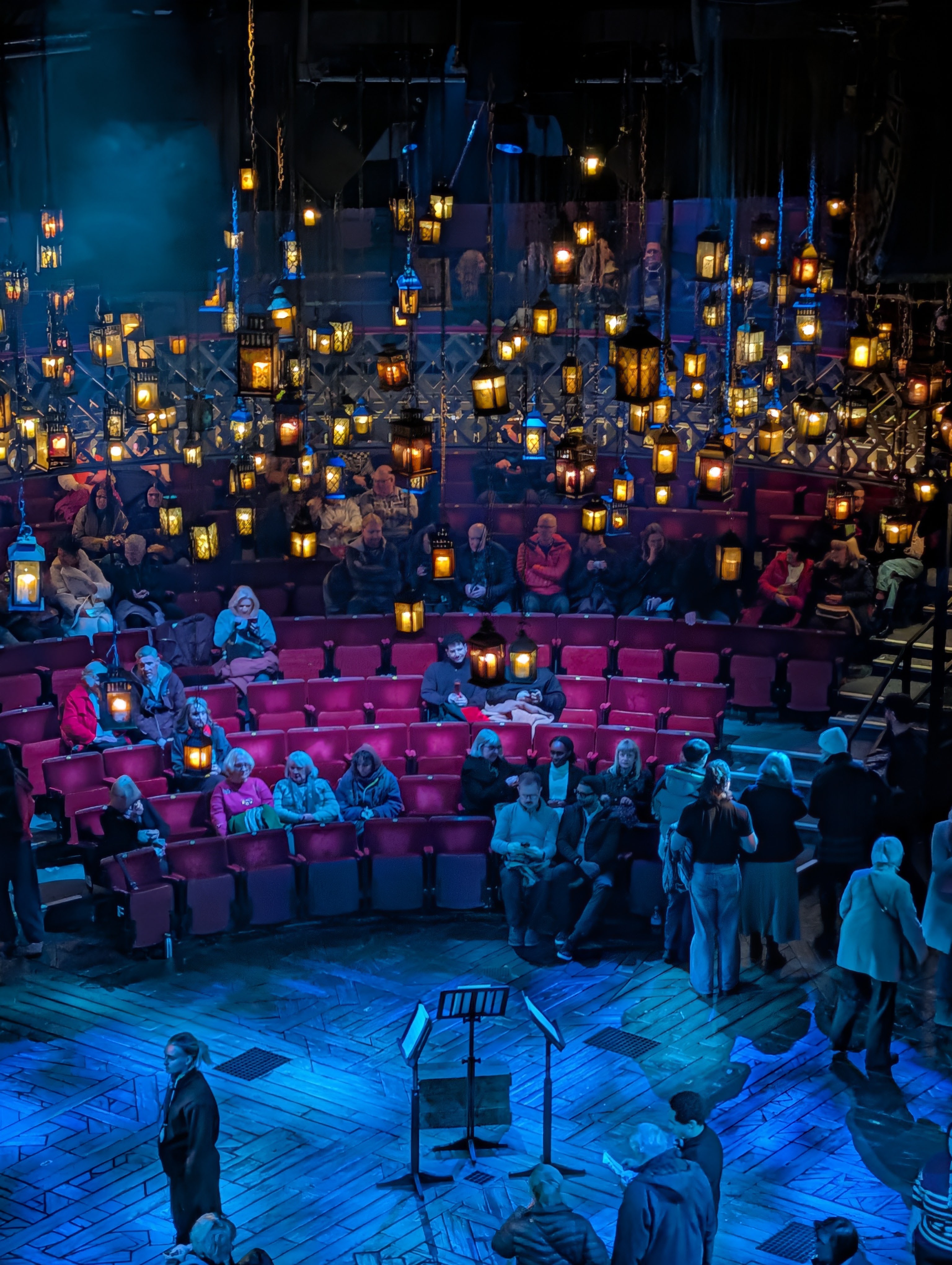
- A Christmas Carol at the Old Vic. A glorious performance.
Read
- continuing Niall Williams’ This is Happiness
Listened
- more Stevie Wonder. I’d always skirted around Hotter than July I think because I erroneously thought it included “I Just Called…”. It doesn’t which turns out to be my loss.
Next week: 56
The week in photos: