
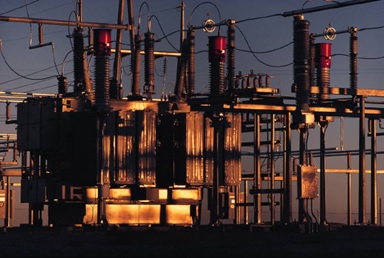
There is a fairly old analogy about Cloud Computing being a bit like the emergence of the electrical grid at the turn of the last century. The short version is that factories used to be located near to sources of power – rivers for waterwheels, windy places for windmills, or where supply of fuel like coal could be easily transported to power steam engines (like next to a canal or a railway). Then companies like Westinghouse developed electric grids, and factories could not only be placed just about anywhere, but the local capabilities required to tend to the power supply mechanism suddenly became obsolete.
Similarly with Cloud computing, so runs the analogy, computing power becomes supplied from the grid (read Internet) and enables organisations to focus on what they do, rather than the boxes that run their software.
There are, as with most analogies, a few flaws, but overall I quite like it. It serves its purpose of getting some of the key Cloud concepts across.
What has struck me the in past view days, though, is that (extending out the analogy slightly) we are still to see the equivalent unit of measure in Cloud computing to the kilowatt-hour – that is a standard way to compare relative pricing of services. Today there are many ways in which Cloud infrastructure services are charged, but many revolved around the concept of a virtual machine: it’s a little like signing up for electricity on the basis of committing to virtual steam engines.
There are a whole stack of reasons why this is the case, some technical, some financial. Overall, though, the power analogy’s biggest weakness is that lack of standard unit of measure…
 mmitII